One sheet
Seven rows, three columns: morning, midday, evening. A check means there is a credible plan; a blank means you are explicitly accepting improvisation, not “forgetting.”
Simplicity
This article stack begins with the real limits: attention, sequence, and the room you have for washing up. The website remains general information; it does not look at your health or replace a clinician. Once the frame is set, the Meals page is easier to use because the week already has a shape.
Decisions have a weekly budgetFewer evening questions, same intent.
One screen before any recipe tabSeven rows, three columns, honest blanks.
The late hour gets a gentler planSame structure as Meals, calmer order.
List the time blocks where you are still happy to use a pan, the blocks where you will only open containers, and the one block where the answer might be “bread and a piece of fruit” without shame. That honesty keeps the type of food you choose aligned with the type of evening you really have, most weeks.
The method does not depend on a particular cuisine or budget level. It depends on not pretending that you have the same focus at 21:30 on Thursday as you had on Sunday afternoon when you first wrote the list.
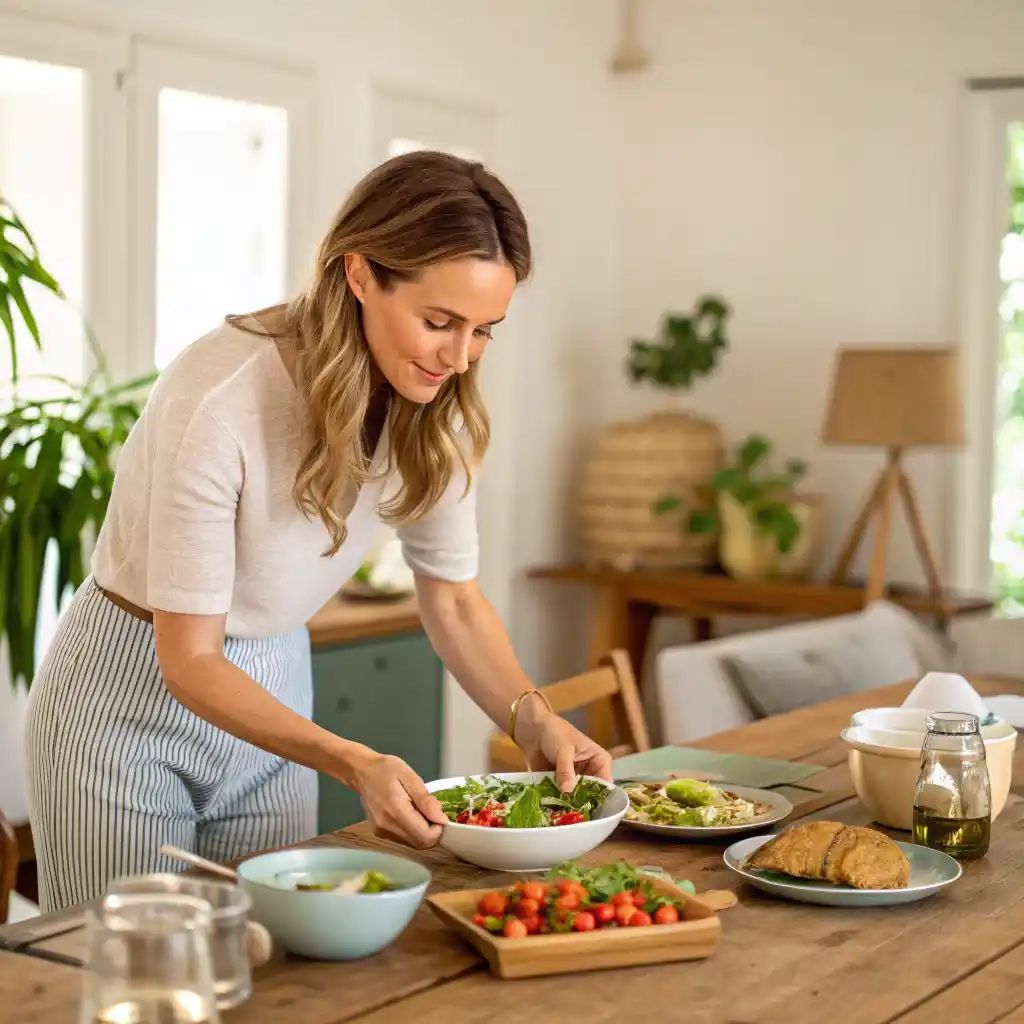
People rarely run out of “ideas”; they run out of decisions. Each evening has a small budget of choices before the brain starts improvising in ways that are expensive or noisy. This page is partly about moving most of those decisions to a short weekly session that you are allowed to end early.
Seven rows, three columns: morning, midday, evening. A check means there is a credible plan; a blank means you are explicitly accepting improvisation, not “forgetting.”
Finish the review before you open a recipe site. Browsing in a thin slice of time usually expands the scope and narrows the sleep.
Anchor the check-in to a day you can defend: Sunday evening, early Monday, or Friday before shops close, depending on the shape of the job.
When a week is split between homes, or when a night shift lands on your cooking night, a fixed script breaks. A softer approach is to keep one anchor behaviour you can do anywhere: a written note in the phone, a lunch bag rule, a single shelf in the fridge that is always the first place to look. None of that is medical, but it is often the difference between reusing a plan and abandoning it.
If a time zone change happens, you can move the review day for that week only instead of discarding the sheet. The tools are not sacred; the intent to have fewer surprises is.
We describe habits, language, and time use. We do not measure biomarkers, read symptoms, or suggest supplements. If an example mentions a type of food, that is for illustration in a week that looks like yours, not a recommendation to everyone, and not a guarantee of an outcome. For anything that needs individual nutrition or medical care, a qualified person where you live is the right channel.
When you are ready to talk containers and reheating, the Meals page picks up in a more concrete register without contradicting the constraints you set here first.
Go to mealsIf you are curious about materials, a call, or a programme description, the Contact form reaches London in plain language.
Write to us